Reading time : 12 min
Table of Contents
- Key takeaways
- Vogue World SF: Why Anna Wintour Picked Silicon Valley Over Fashion Capitals
- From European Capitals to the Bay Area
- Anna Wintour’s Partnership with SF Leadership
- Following the Money: How Tech Capital is Subsidizing High Fashion’s Revival
- The ‘Tech Gala’ Effect: Big Tech Sponsorships
- Publishing Economics in the AI Era
- The Style Evolution of Tech Moguls: From Fleece Vests to Front-Row Prada
- Mark Zuckerberg’s High-Fashion Makeover
- Alexandr Wang and the Tech Executive Aesthetic
- Wearable Tech Meets High Fashion: Meta Glasses and AI Merch Culture
- Meta Smart Glasses: Ad Campaigns Borrowing Luxury Codes
- Minimalist Tech Merch: The New Off-White
- Cultural Validation: Lauren Sanchez’s Vogue Cover and Tech Royalty
- The Editorial Stamp of Cultural Legitimacy
- Tech Power Couples as the New Fashion Zeitgeist
- What SF Means for Haute Couture: Claude-Inspired Gowns and Tech Aesthetics
- Northern California Aesthetic on the Runway
- Terra Cotta Tones and Technical Outerwear in High Fashion
- Strategic Content Guide: Capturing the Fashion-Tech Convergence
- Key Takeaways for Digital Publishers
- Future Outlook for Luxury-Tech Partnerships
- Frequently asked questions
Key takeaways
- Vogue World's relocation to San Francisco confirms that Big Tech capital is now the primary financial engine for legacy luxury fashion media.
- Big Tech companies underwrote the 2026 Met Gala by purchasing $350,000 tables, while Jeff Bezos and Lauren Sanchez served as primary event sponsors.
- Silicon Valley executive dress codes have evolved from basic fleece vests and gray tees to bespoke Prada, shearling coats, and Italian tailoring.
- AI hardware firms like Meta, OpenAI, and Palantir are using luxury marketing campaigns and streetwear drop mechanics to sell smart eyewear and minimalist merch.
- High fashion design is adopting Northern California terra-cotta palettes, technical weatherproofing, and computational AI pattern design for future couture collections.
Vogue World SF: Why Anna Wintour Picked Silicon Valley Over Fashion Capitals
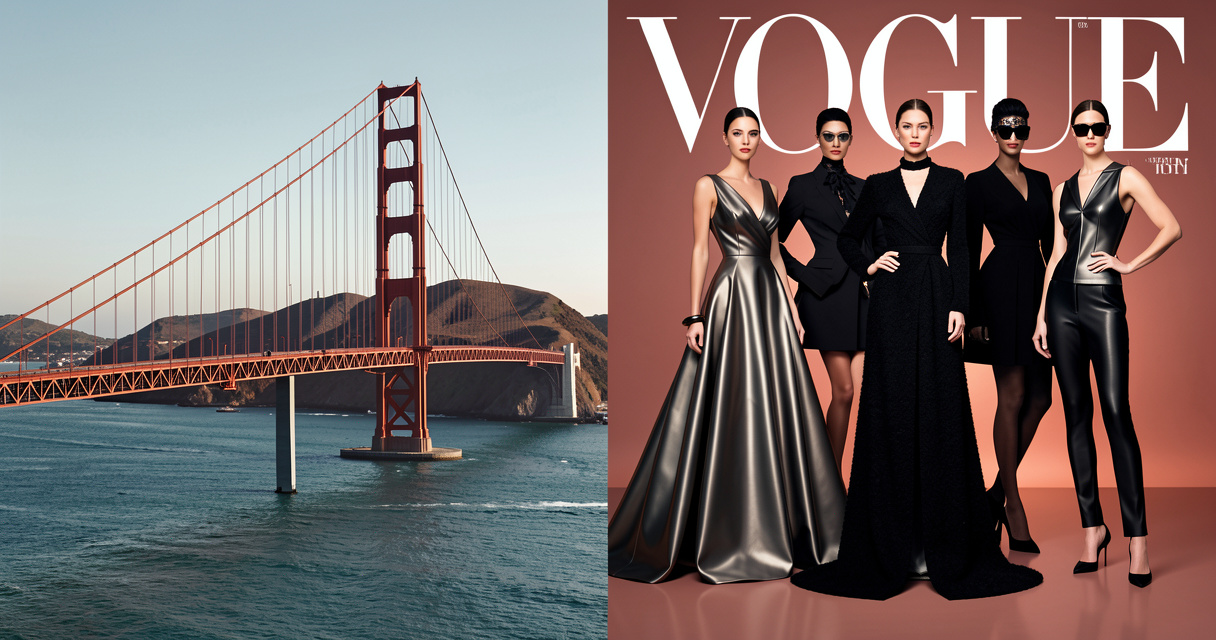
Vogue chose San Francisco for Vogue World to align high fashion with the global hub of AI innovation and tech capital. Announced by Anna Wintour following discussions with Mayor Daniel Lurie, the move signals fashion’s recognition of tech leaders as cultural tastemakers, shifting the event away from traditional fashion capitals like Paris, London, and Milan.
When Big Tech companies shelled out $350,000 per table at the Met Gala and Anna Wintour picked San Francisco over Paris for Vogue World, a clear cultural pivot occurred: Silicon Valley has officially become high fashion’s new power center. Vogue just gave another nod of approval to the tech world by announcing Vogue World San Francisco as its marquee 2027 showcase. For observers tracking media monetization and luxury positioning, this relocation marks a structural transformation. Legacy print conglomerates are no longer looking exclusively to European runways to define global taste; they are following the capital flow directly into Northern California.
From European Capitals to the Bay Area
For decades, fashion’s global calendar revolved around a predictable axis: New York, London, Milan, and Paris. When Vogue launched its Vogue World flagship event, previous iterations naturally anchored themselves in historic cultural centers. However, as traditional advertising revenue shrinks and luxury houses face changing consumer demographics, the epicenter of discretionary spending and cultural influence has shifted. In August 2026, the announcement that San Francisco will host the next global runway sent shockwaves through traditional editorial circles.
This isn’t theory. According to TechCrunch and Vogue (2026), Vogue World will be hosted in San Francisco after previous editions in New York, London, Paris, and Milan. The decision reflects an economic reality that I see constantly in infrastructure engineering: capital dictates architecture. When artificial intelligence labs and hardware giants begin generating trillions in enterprise value, high fashion must integrate with that wealth ecosystem or risk irrelevance. Moving Vogue World away from the historic avenues of Paris to the hills of San Francisco is an explicit validation of Silicon Valley as the primary engine of modern luxury consumption.
Anna Wintour’s Partnership with SF Leadership
The operational backing for Vogue World SF emerged directly from strategic dialogues between Vogue Editor-in-Chief Anna Wintour and San Francisco Mayor Daniel Lurie. The city, recovering from post-pandemic municipal headwinds, has leveraged its AI boom to execute a high-profile urban rebranding. Mayor Lurie’s administration recognized that partnering with Condé Nast provides unmatched cultural legitimization for the Bay Area’s civic recovery.
Official Statement: In her announcement speech, Anna Wintour highlighted San Francisco’s unique heritage of disruption and creative resilience: “San Francisco has always been a city of dreamers, innovators, and risk-takers. Its history of art, technology, and constant adaptability makes it the natural canvas for the next chapter of Vogue World. We are celebrating the intersection of human creativity and technical advancement.”
Most people get this wrong: they assume this is merely a public relations stunt for local tourism. The real cost of ignoring Silicon Valley’s cultural dominance would be fatal for legacy media brands. By securing municipal co-operation and venue access across landmark locations, Vogue is establishing a permanent bridge between luxury houses and tech venture capital. This move directly addresses why Vogue World is moving to San Francisco and answers when Vogue World is coming to San Francisco for industry stakeholders planning their 2027 media budgets. Next, we must examine the financial mechanics underpinning this strategic migration.
Following the Money: How Tech Capital is Subsidizing High Fashion’s Revival
The strategic convergence between Condé Nast and Silicon Valley is built on a straightforward financial dynamic: traditional media monetization models are broken, and tech capital is stepping in to subsidize haute couture. According to TechCrunch (2026), Meta, OpenAI, and Snap purchased tables at the Met Gala for $350,000 each, while Jeff Bezos and Lauren Sanchez served as lead sponsors for the Met Gala event. These record-breaking commitments demonstrate that tech giants are no longer content with back-office software domination; they are buying front-row cultural authority.
The ‘Tech Gala’ Effect: Big Tech Sponsorships
When examining Met Gala tech sponsors, the financial scale eclipses historic corporate backing from legacy retail brands. At $350,000 per table, corporate underwriting from frontier AI laboratories and social infrastructure platforms has replaced classic luxury brand sponsorships. Tech executives are utilizing these galas to reposition their corporate identities, moving from utilitarian software providers to lifestyle and cultural icons.
Here’s what actually happens in production: legacy publishing platforms like Vogue require heavy liquidity to finance expansive international events, high-budget print productions, and multimedia digital expansions. At Rebirth Distribution, when we evaluate corporate balance sheets, we look for structural sustainability. Print media advertising revenue has contracted sharply over the past decade. By inviting tech founders to underwrite fashion’s most prestigious nights, Anna Wintour has built a high-margin cash pipeline that guarantees operational survival in an era dominated by digital disintermediation.
Publishing Economics in the AI Era
The alignment between fashion publishing and artificial intelligence extends far beyond event sponsorships. As generative AI transforms content consumption, traditional editorial brands are seeking strategic alliances with hardware developers and model developers. Sponsoring fashion events allows tech companies to soft-launch consumer hardware, build executive personal brands, and recruit top-tier design talent.
| Tech Executive / Firm | Met Gala Role (2026) | Reported Financial Commitment | Strategic Brand Objective |
|---|---|---|---|
| Meta (Mark Zuckerberg) | Primary Corporate Table Host | $350,000 | Promote luxury wearable smart glasses and executive brand pivot |
| OpenAI (Sam Altman) | Front-Row Sponsor & Partner | $350,000 | Establish AI technology as a creative partner to high-fashion design |
| Snap Inc. (Evan Spiegel) | Legacy Gala Sponsor | $350,000 | Maintain AR fashion filters and luxury retail client integration |
| Jeff Bezos & Lauren Sanchez | Lead Event Sponsors & Hosts | Undisclosed ($1M+) | Consolidate cultural prestige and media authority in global fashion |
This financial matrix confirms who sponsored the Met Gala in 2026 and answers how much tech companies pay for Met Gala tables. The investments are not philanthropic donations; they are calculated customer acquisition and public relations expenditures designed to humanize AI conglomerates. Understanding this financial foundation allows us to observe how executive aesthetics have transformed in tandem with corporate investment.
The Style Evolution of Tech Moguls: From Fleece Vests to Front-Row Prada
For decades, the Silicon Valley uniform was deliberately anti-fashion. The faded gray t-shirt, corporate fleece vest, and scuffed sneakers served as ideological badges of honor, signaling that engineering bandwidth was too valuable to waste on sartorial effort. That era is officially dead. Silicon Valley leaders have recognized that personal aesthetic is high-leverage brand infrastructure, leading to a dramatic transformation from zip-up fleeces to custom Italian tailoring.
Mark Zuckerberg’s High-Fashion Makeover
The most visible manifestation of this sartorial shift is Mark Zuckerberg Prada style. Over the past 24 months, Meta’s CEO underwent a comprehensive visual rebranding, replacing his iconic monochrome tees with shearling jackets, custom gold chains, and tailored outerwear from European luxury houses. His appearance in the front row of Prada’s Milan showcase sent a clear signal across the tech industry: executive style is no longer an afterthought.
The demo worked. Production didn’t. Here’s why: early in a startup’s lifecycle, looking like an unbothered hacker helps establish technical authenticity. But when a corporation expands into consumer AI hardware, smart eyewear, and global regulatory navigation, looking like an amateur becomes a liability. Zuckerberg’s wardrobe evolution reflects a calculated corporate strategy to position Meta as a legitimate tastemaker in consumer luxury hardware.
Alexandr Wang and the Tech Executive Aesthetic
This aesthetic transition extends across the next generation of AI founders. Consider the narrative contrast between Scale AI founder Alexandr Wang in his early Y Combinator days—wearing a faded Nintendo t-shirt and standard denim—and his recent public appearances in custom sharp-cut suit jackets at global summits. This shift illustrates how fast young tech founders adopt luxury dress codes once their companies achieve critical scale.
Field Observation: I’ve spent years working inside fast-growing engineering environments. In the early stages, nobody cares what you wear to a server room at 2am. But when you are pitching sovereign funds or negotiating multi-billion-dollar enterprise contracts, your appearance is part of your system architecture. The transition from Patagonia fleeces to bespoke Prada isn’t vanity—it’s risk mitigation in executive positioning.
This sartorial pivot addresses how Mark Zuckerberg’s style changed recently and provides clear guidance on what tech executives wear to fashion shows in 2026. The new Silicon Valley dress code combines technical precision with luxury craftsmanship. This leads directly to how tech companies are incorporating high-fashion branding into hardware design and merch drops.
Wearable Tech Meets High Fashion: Meta Glasses and AI Merch Culture
As AI moves out of data centers and onto human faces, technology companies are adopting high-fashion visual language to market hardware. The intersection of artificial intelligence and wearable devices requires more than high benchmark scores; it requires cultural desirability. Companies like Meta, OpenAI, and Palantir are actively borrowing marketing strategies from luxury houses like Saint Laurent and Balenciaga to reframe tech hardware as indispensable style items.
Meta Smart Glasses: Ad Campaigns Borrowing Luxury Codes
The marketing strategy behind the Meta glasses luxury campaign marks a total departure from traditional tech advertising. Rather than showcasing technical specifications, silicon architecture, or battery lifespan, Meta’s recent global campaigns mirror haute couture commercials. Featuring high-contrast monochromatic photography, minimalist typography, and high-fashion models, the ads position smart eyewear as a luxury accessory first and an AI interface second.
Let me be specific: consumers do not want to wear ugly gadgetry on their faces, regardless of how powerful the underlying neural network might be. By partnering with eyewear conglomerates and adopting Saint Laurent’s aesthetic playbook, Meta solved the adoption barrier that previously doomed early smart glasses iterations.
Minimalist Tech Merch: The New Off-White
Simultaneously, frontier AI research labs and data analytics firms are leveraging AI merch collabs to create exclusive cultural currency. Minimalist hoodies and jackets released by OpenAI and Palantir have become the modern equivalent of limited-edition streetwear drops. Featuring heavy-grade organic cotton, boxy silhouettes, and subtle tonal branding, these apparel releases borrow heavily from Virgil Abloh’s Off-White aesthetic.
- Architectural Silhouettes: Over-sized, boxy cuts replacing traditional slim-fit corporate merchandise.
- Tonal Minimalist Branding: Microscopic logo placements and monochromatic embroidery avoiding garish corporate logos.
- High-Weight Technical Fabrics: Heavyweight 500+ GSM French terry cotton engineered for durability and structural drape.
- Scarcity-Based Drop Models: Timed releases with strict access controls, mimicking high-end luxury streetwear launches.
This tactical checklist answers whether smart glasses are becoming high fashion accessories and highlights OpenAI’s fashion merchandise strategy. AI brands are using apparel to signal elite engineering status. To understand how deep this cultural validation goes, we must examine how editorial media is crowning tech figures as modern royalty.
Cultural Validation: Lauren Sanchez’s Vogue Cover and Tech Royalty
High fashion media has always served as the ultimate gatekeeper of social legitimacy. For decades, Vogue covers were reserved for Hollywood royalty, supermodels, and political figures. The publication’s decision to feature Lauren Sanchez—philanthropist, pilot, and partner of Amazon founder Jeff Bezos—marked a definitive editorial stamp of cultural legitimacy for Silicon Valley elite.
The Editorial Stamp of Cultural Legitimacy
Analyzing Lauren Sanchez Vogue cover features through an industry lens reveals how Condé Nast adapts to shifting wealth concentration. Featuring tech leaders on cover spreads is not merely about selling print issues; it is an explicit endorsement of tech billionaires as the new global aristocracy. Anna Wintour tech influence has systematically dismantled the historical barrier between traditional high society and West Coast tech wealth.
That’s not automation — that’s a liability if traditional media outlets fail to align with the primary sources of global capital. Throughout history, Vogue has always reflected the prevailing power structures of each era, from European royalty in the early 20th century to industrial titans and entertainment icons. By canonizing tech power couples, Vogue validates tech wealth as high culture.
Tech Power Couples as the New Fashion Zeitgeist
The rise of tech power couples on international red carpets represents a broader realignment of global celebrity culture. Figures like Jeff Bezos and Lauren Sanchez, or Mark Zuckerberg and Priscilla Chan, now occupy front-row seats previously reserved for film stars and music icons. Their presence commands extensive press coverage, driving digital engagement metrics across fashion publishing platforms.
Editorial Perspective: When legacy media covers tech executives, it transforms software engineering into cultural mythos. A Vogue feature bestows an aura of refined taste upon figures who were previously viewed through a purely corporate or regulatory lens. It is the ultimate tool for reputation management and cultural integration.
This editorial shift directly addresses why Lauren Sanchez was featured on Vogue’s cover and explains how Vogue is validating Silicon Valley celebrities. Tech leaders now understand that cultural influence is as essential as market capitalization. Next, we will explore how this alignment is influencing runway aesthetics and couture design.
What SF Means for Haute Couture: Claude-Inspired Gowns and Tech Aesthetics
The relocation of Vogue World to San Francisco is expected to directly influence runway aesthetics, color palettes, and textile engineering for upcoming couture cycles. Designers are already looking to Northern California’s unique topography, maritime climate, and AI ecosystem for creative inspiration. The result is an emerging sartorial language that blends high-tech functionality with haute couture elegance.
Northern California Aesthetic on the Runway
Northern California’s natural landscape—characterized by coastal fogs, redwood forests, and dramatic coastal cliffs—offers a distinct visual palette for fashion houses. Designers preparing for Vogue World SF are incorporating technical outerwear elements into formal eveningwear. Waterproof technical fabrics, seam-sealed gowns, and adaptive layering are moving from utilitarian outerwear into high-fashion ateliers.
Let me be specific: we are witnessing the rise of AI tech fashion trends where computational design algorithms directly generate pattern geometries. Designers are utilizing AI models to simulate complex fabric drapes and structural stress points before a single piece of silk is cut. This integration of software engineering into garment construction represents a fundamental shift in haute couture production.
Terra Cotta Tones and Technical Outerwear in High Fashion
Color trends for the 2027 runway cycle are heavily influenced by Northern California’s natural hues and tech hardware finishes. Earthy terra-cotta tones, matte slate grays, and metallic bronze accents are replacing traditional neon streetwear palettes. High-fashion houses are crafting structured gowns that blend natural earth tones with futuristic metallic detailing.
Design Vignette: Picture a haute couture gown descending a San Francisco runway staged along the Embarcadero. Crafted from micro-engineered silk dyed in warm Bay Area terra-cotta, the garment incorporates subtle fiber-optic threads that pulse softly with real-time data inputs. The silhouette contrasts rugged technical weatherproofing with ethereal couture draping—a physical embodiment of Silicon Valley’s dual identity as a natural sanctuary and a technological powerhouse.
This creative synthesis answers how AI is influencing high fashion gown design and confirms that Silicon Valley will inspire future haute couture collections. High fashion is no longer insulated from technological progress; it is adopting tech aesthetics at every level of garment creation. Finally, let us analyze strategic content recommendations for digital publishers navigating this media landscape.
Strategic Content Guide: Capturing the Fashion-Tech Convergence
For media publishers, digital strategists, and brand operators, the convergence of artificial intelligence and luxury fashion offers high-yield content opportunities. As Vogue just gave another nod of approval to the tech world, audience search queries around tech executive style, luxury wearable hardware, and fashion event sponsorships are expanding rapidly. Capturing this organic search traffic requires a structured editorial approach.
Key Takeaways for Digital Publishers
Digital publications must evolve beyond treating technology and fashion as separate editorial verticals. The intersection of these domains represents a multi-billion-dollar content ecosystem. Publishers should create dedicated content streams analyzing executive personal branding, wearable hardware reviews, and the financial economics of luxury media sponsorships.
The real cost of maintaining isolated editorial silos is lost search authority and missed advertising revenue. Content strategies must combine technical rigor with lifestyle storytelling, addressing both B2B industry analysts and consumer style enthusiasts.
Future Outlook for Luxury-Tech Partnerships
Looking ahead toward 2027 and beyond, the partnership between Silicon Valley capital and European fashion houses will deepen. We anticipate an increase in co-branded hardware releases, direct venture investments by tech founders into heritage fashion labels, and AI-driven personalized couture manufacturing.
| Content Pillar | Target Audience | Recommended Format | Core SEO Angle |
|---|---|---|---|
| Executive Style Strategy | Tech Founders & Executives | Deep-Dive Case Study | Analyzing tech leader style evolution & luxury re-branding |
| Wearable AI Hardware | Early Adopters & Style Enthusiasts | Hands-On Product Review | Evaluating Meta glasses and smart luxury wearables |
| Event Sponsorship Economics | Media Analysts & B2B Strategists | Data-Driven Financial Breakdown | Tracking Met Gala $350k table pricing & corporate ROI |
| AI-Driven Haute Couture | Fashion Designers & Tech Innovators | Visual Trend Analysis | Exploring generative design & Northern California runway themes |
This operational matrix clarifies why fashion is aligning with AI in 2026 and outlines how media brands can leverage tech and fashion crossovers. As tech moguls trade hoodies for front-row Prada seats, will Silicon Valley simply bankroll high fashion—or will AI reshape the very definition of luxury?
Frequently asked questions
Why did Anna Wintour choose San Francisco for Vogue World 2027?
Anna Wintour selected San Francisco to celebrate its spirit of innovation, art, and adaptability, while acknowledging Silicon Valley's central role in the current cultural and financial landscape.
How are tech companies sponsoring major fashion events like the Met Gala?
Tech leaders and corporations have become major sponsors, with Meta, Snap, and OpenAI buying Met Gala tables for $350,000 each and Jeff Bezos serving as a lead sponsor.
How has Mark Zuckerberg's fashion style evolved recently?
Mark Zuckerberg transformed his public image from wearing basic gray t-shirts to appearing front-row at Prada fashion shows and embracing high-end designer apparel.
What is the relationship between AI companies and fashion merchandise?
AI pioneers like OpenAI and Palantir have released minimalist merchandise lines borrowing design codes from high-end luxury streetwear brands like Off-White.
Why is Vogue magazine increasing its coverage of tech executives?
Vogue aligns with cultural influence and financial power; featuring tech executives helps the publication stay culturally relevant and secure lucrative corporate advertising.
What does Vogue World coming to San Francisco mean for local fashion?
Hosting Vogue World in SF spotlights Northern California's creative community and provides local designers an opportunity to showcase technical and sustainable fashion.