Reading time: 4 min
Table of Contents
Key Takeaways
- Regulatory approval is not deployment: The FCC gave SpaceX conditional clearance for up to 1 million Starmind satellites, but the hard problems — cost, cooling, financing, and orbital debris — remain unsolved.
- Latency and cooling will break the economics: Moving compute to orbit doesn’t eliminate physics. Thermal dissipation in vacuum and round-trip signal delay are the real bottlenecks nobody wants to talk about.
- This is a long-horizon play, not an infrastructure option today: SpaceX has 7 years for the first operational satellite and 14 years for the full constellation. Plan accordingly if you’re evaluating orbital capacity for your stack.
The demo worked. Production didn’t. Here’s why. When SpaceX announced its orbital data center ambitions, the reaction split into two camps: the believers who saw a bold new frontier and the skeptics who saw a PowerPoint slide with a rocket on it. The FCC just made that debate more concrete by granting conditional approval for up to 1 million satellites under the Starmind name. That’s the headline. The reality is more complicated, and this is where the engineering discipline of production-grade thinking actually matters.
What the FCC Actually Approved
Let me be specific. The Federal Communications Commission authorized SpaceX to deploy and operate a constellation of up to one million satellites for its orbital data center business. The commission sided with SpaceX against objections from Amazon, Viasat, and the American Astronomical Society, who flagged orbital debris, radiofrequency interference, and environmental risks. The FCC dismissed several of those concerns, ruling they fell outside its regulatory scope.
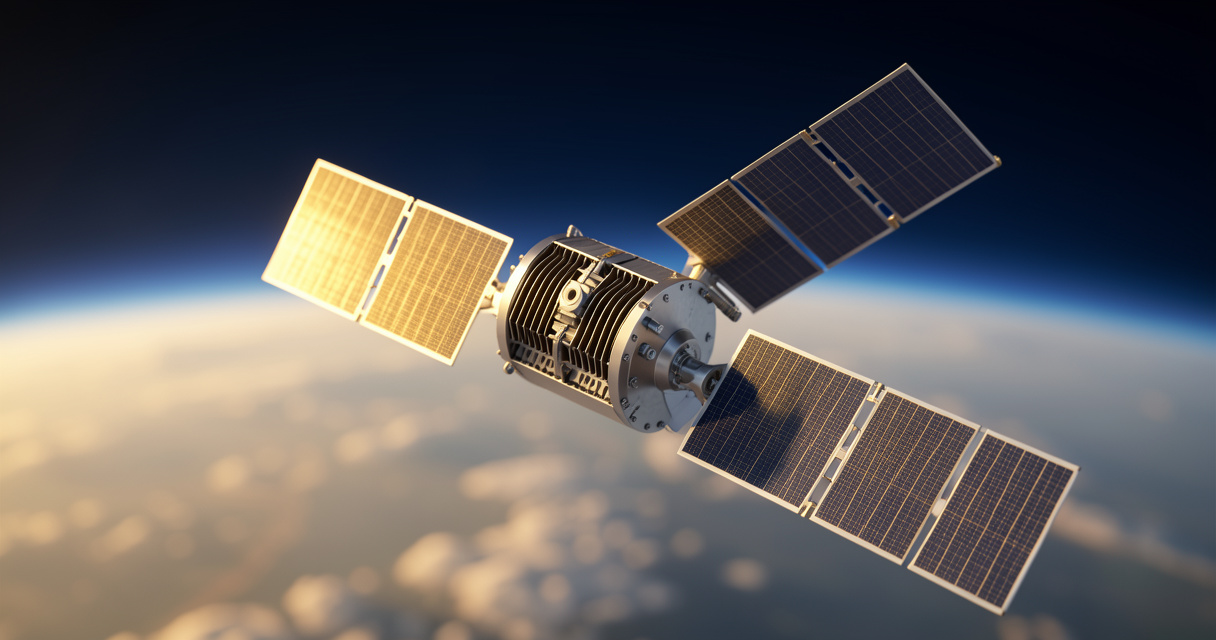
FCC Chair Brendan Carr framed the decision as opening a new frontier for computing infrastructure. Musk thanked him publicly. That’s the political layer. Underneath it, the Starmind satellites would operate between 500 and 1,002 kilometers in altitude, using lasers for inter-satellite links and radiofrequency as a fallback for ground control. That’s the architecture on paper. The question I actually care about is whether it survives contact with production.
The Three Problems That Don’t Go Away With Paperwork
Here’s what actually happens in production: approval is the easy part. The hard part is every problem that shows up after the ribbon cutting. This isn’t theory — I’ve watched the same pattern play out in every infrastructure project I’ve touched. You get the permits, you sign the contracts, and then you discover the physical and economic constraints you skimmed over in the planning doc.
Cooling Compute in a Vacuum
On Earth, we solve heat with air, water, or coolant loops passing through a dense atmosphere. In orbit, there is no atmosphere. Heat dissipates only through radiative cooling, and radiation is slow, inefficient per unit of surface area, and brutally constrained by mass budgets. Every watt of compute you throw into space has to be rejected through a radiator that adds weight, complexity, and launch cost. Most people get this wrong when they compare carbon footprints between terrestrial and orbital data centers: they count the solar panel output and forget that the radiator is the actual bottleneck. That’s not automation — that’s a liability dressed up as climate math.
The Latency Honest Conversation
Starlink has done remarkable work reducing round-trip latency for consumer internet. But raw latency is not the same as interactive compute latency. A round trip to orbit is roughly 5 to 10 milliseconds at best, before you touch an application layer. That’s fine for batch inference, model training jobs flushed to checkpoint storage, and asynchronous workloads. It’s not fine for anything that needs a tight state machine, a live session handoff, or a control loop that closes in under a second. If your business needs sub-20ms p99 across regions, orbital is not your answer. If you’re running nightly training jobs and shipping checkpoints, the math changes. The point is that the architecture dictates the use case — not the other way around.
Financing the Chips in the Sky
Nothing in the FCC approval addresses how SpaceX will pay for computing chips that never come back down to Earth. That’s a genuine financial engineering problem. Semiconductor fabrication is a capital-intensive industry with a fixed return window. Satellites are effectively disposable computers launched into an environment where repair isn’t possible and recovery requires fuel budget. The real cost is not the satellite — it’s the total cost of ownership including expected failure rate, replacement launches, and amortization over a 5-to-14 year operational window. Amazon called this a “loftly ambition rather than a real plan.” I’d frame it differently: it’s a capital plan with no public amortization table yet. That’s the gap that matters.
What the 7-Year and 14-Year Timelines Tell You
The FCC gave SpaceX seven years to place the first operational satellite and fourteen for the full constellation. Read that again. Fourteen years is not a deployment window — it’s a generational bet. Here’s what that means for anyone evaluating this infrastructure: you are not evaluating a solution you can buy in 2026. You are evaluating a technical direction that might reshape regional compute pricing in the early 2040s. If your startup needs inference capacity that scales next quarter, orbital latency is not on the roadmap. If you’re a strategic planner at scale and need long-term capex planning, then this signals that hyperscalers will eventually push some workloads into orbit — but not yours, and not soon.
Also notice that SpaceX still has not cleared its orbital debris plan for satellites above 600 kilometers. It requested a waiver of FCC rules that require satellites below 2,000 kilometers to reenter within five years of mission end. Starmind wants to park retired satellites in alternative orbits, including heliocentric — orbits around the Sun. That is a fundamentally new category of regulatory question, and the answer will shape how every satellite operator plans disposal. A conditional approval that leaves debris policy open is the regulatory equivalent of a CI pipeline that runs tests only in the happy path. It works until it doesn’t.
The Architecture-First Read
I don’t care about the hype cycle. What I care about is that this decision establishes a regulatory lane for orbital compute that does not exist anywhere else in the world. That’s the structural shift. Even if Starmind never serves a single workload, the precedent means international regulators will be pressured to open similar lanes, and any major cloud provider planning infrastructure in the next decade will need to model orbital capacity as a long-horizon option. That is a change in the form of the roadmap, not the content of the product. In production terms, it means architects need a new line item in their multi-year infrastructure models — not because it ships tomorrow, but because ignoring it means being caught flat-footed if the economics land.
We built Rebirth Distribution around the premise that infrastructure has to hold when the demo is over. Applaud the engineering ambition of orbital data centers, question the cooling math, count the pennies on the chips, and watch the disposal rules. That’s how you plan an actual system, not a launch video.