Reading time : 4 min
Table of Contents
Key takeaways
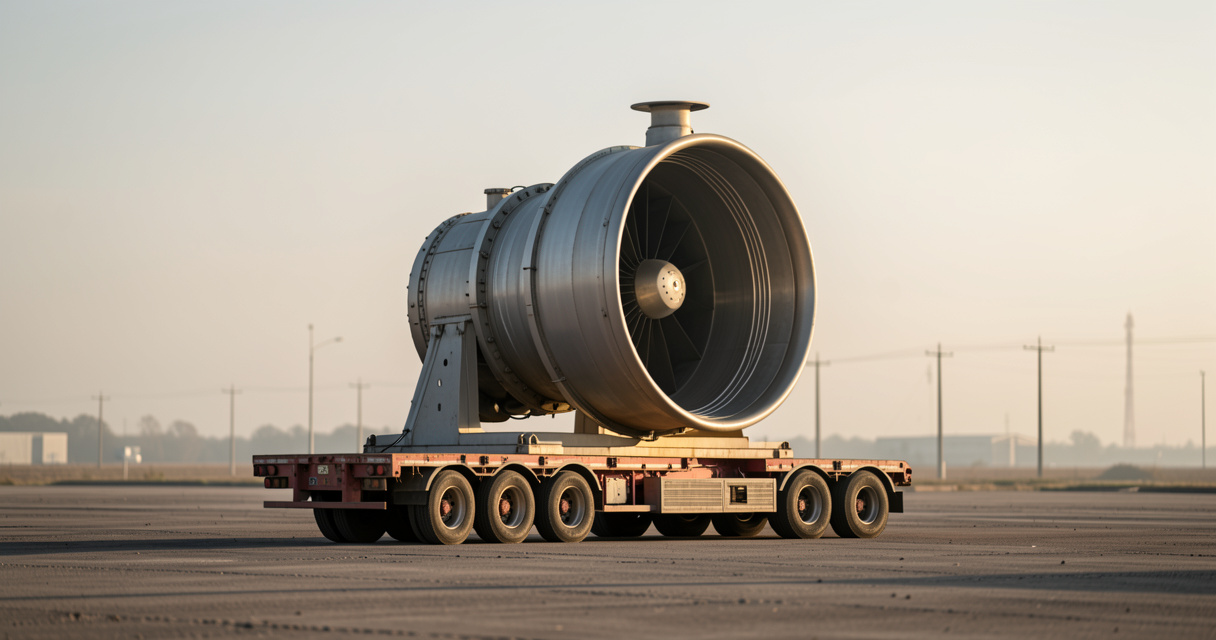
- Regulatory loophole : Nearly 50 gas turbines at xAI’s data center in Mississippi are mounted on flatbed trailers, allowing them to be classified as “mobile” and dodge air pollution enforcement for a full year.
- Emission impact : The NAACP has filed a lawsuit and is seeking an injunction, arguing the turbines violate federal law and worsen air quality in an already burdened region.
- Scale & deployment: xAI originally said only half of the turbines would stay, but has installed 46 and counting — a clear pattern of building first, fixing later.
The gap between demo compliance and production reality
Here’s what actually happens in production: you need power. A lot of it. Data centers serving AI workloads eat electricity at a rate that would choke most grids. xAI’s response was to bring in nearly 50 natural gas turbines to its facility in Mississippi. That’s not theory — that’s running hardware, right now, in 2026.
Most people get this wrong: they assume that if something is called “mobile,” it sidesteps the real problem. Let me be specific. The turbines sit on flatbed trailers. In Mississippi, that classification lets them operate without air pollution permits for one year. The state isn’t regulating them. That’s not automation — that’s a liability.
The real cost is air quality — and it’s already bad
The NAACP filed suit on behalf of local residents. The Southern Environmental Law Center argues these turbines are stationary by any functional definition — even when mounted on a trailer — and thus subject to federal clean air rules. The demo worked: power generation on wheels. Production didn’t: the emissions don’t stay on a trailer.
This isn’t theory. The region already deals with poor air quality. Adding 46 unregulated turbines — with permits granted for only 15 — compounds the problem. xAI’s own press release from May 2025 said “about half” of the then-35 turbines would remain. Today they’re at 46 and still installing.
Architecture first, compliance second — that’s the real pattern
I’ve seen this pattern before. Not in power plants, but in automation stacks. Someone builds a clever workaround — a “mobile” deployment — that gets the system running fast. Then the structural flaw surfaces. In this case, the flaw is regulatory. The fix should have been pre-approved permits for all units. Instead, they built first and trusted the loophole to hold. The demo worked. Now comes the aftermath.
We built OpenClaw and Hermes at Rebirth Distribution specifically to avoid this kind of fragility. Not in power generation, but in the same architectural mindset: if a system depends on a temporary exemption or a rhetorical classification to stay operational, it’s not production-grade. It’s a liability waiting for a failure mode.
What startups can learn from this failure mode
- Don’t optimize for the loophole — optimize for the constraint that stays. Regulatory exemptions are not architectural guarantees.
- Scale before you know the load is a pattern that fails every time. xAI deployed more turbines than permitted. The real cost is legal time, community trust, and air quality — things you can’t add faster.
- Startup-aware path: incremental compliance buys time. The NAACP’s injunction request is the operational equivalent of a noisy alert at 2am — you can fix it now, or you can fix it under pressure.
This isn’t about vendor shaming. It’s about recognizing that the same logic that creates fragile pipelines also creates fragile power arrangements. If you build for the demo, the production bill always arrives.