Reading time: 3 min
Table of Contents
Key Takeaways
- Production Simulation: The FBI’s 22,000 sq ft replica town mimics real communities with functioning devices to train investigators in cyberattack response without spillover risks.
- Infrastructure at Scale: The range includes over 200 physical servers (Windows/Linux) and a data center replicating actual corporate environments encountered during breaches.
- Real-World Consequences: Simulated ransomware attacks focus on high-pressure decisions when critical infrastructure—like hospital systems—goes dark, not just theory.
What Most People Get Wrong About Cyber Training
Most cyber training happens in a classroom with slides and sanitized scenarios. That’s not automation — that’s a liability. Here’s what actually happens in production: when a hospital’s systems get encrypted, you don’t have time to flip through a manual. The demo worked. Production didn’t. That’s the gap the FBI’s Kinetic Cyber Range is designed to close.
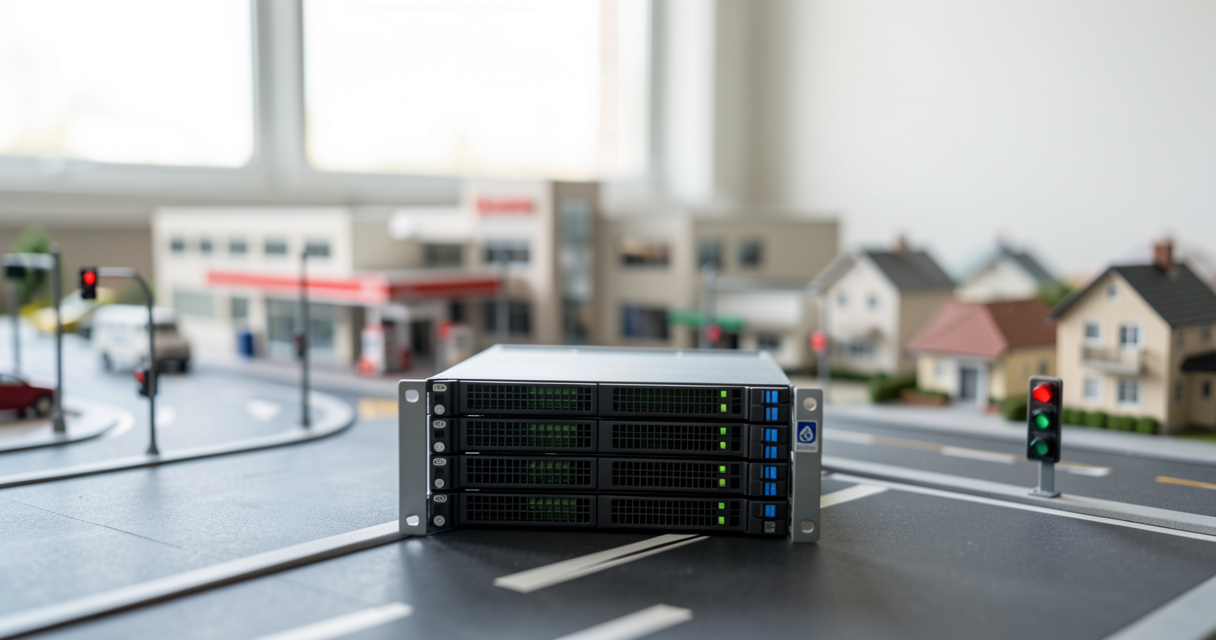
Since opening in February 2025, this 22,000 square-foot replica town on the Huntsville, Alabama campus has trained over 1,400 students — FBI personnel and partners from federal and local agencies. This isn’t theory. It’s a fully furnished town with houses, a hotel, a gas station, a grocery store, a courthouse, a hospital, and a power company, all wired with functioning devices and systems.
The Infrastructure That Makes It Real
The range includes a data center with more than 200 physical servers — some running Windows, some Linux. Dave Beachboard, the range’s program manager, describes them as: “cold, cramped, noisy, dark, miserable.” That’s the real environment investigators face when executing a search warrant or responding to a breach. Most people get this wrong — they focus on the attack, not the conditions under which you have to investigate it.
The facility prevents simulated attacks from spilling out into the real world, but inside, every system behaves like a real community or business. The real cost of getting this wrong is not just data loss — it’s patient harm when hospital systems go dark, or grid instability when power company controls are compromised.
Ransomware Scenarios That Push Real Boundaries
Let me be specific. The FBI’s 2025 Internet Crime Report logged over one million complaints and a record $20.9 billion in U.S. cybercrime losses — a 26% jump from the prior year. Ransomware is ranked the top ongoing threat to critical infrastructure. The Kinetic Cyber Range simulates these high-pressure decisions: when a hospital’s systems go dark, investigators must choose between containment and patient safety.
That’s not automation — that’s a liability if you’re not trained for it. The range forces you to make those calls in a controlled environment, so you don’t learn by breaking things in production.
Digital Forensics Under Production Conditions
The facility also trains investigators in digital forensics — cracking the cybersecurity defenses of modern encrypted devices to extract data. The tools used exploit vulnerabilities that are never disclosed to manufacturers like Apple or Google. This is controversial, but in production, investigators need to know how to work with and around these safeguards without compromising their operation.
We built Rebirth Distribution’s automation stack to handle real-world reliability, not just demos. The same principle applies here: you can’t simulation-proof your team unless you simulate the actual failure modes they’ll face.
A Blueprint for Production-Grade Training
This isn’t theory. The FBI’s approach is architecture-first: building the physical and digital infrastructure to match the chaos of a real incident. For startups and teams that need automation that works in the real world, the lesson is clear — your training environment should be as close to production as possible, complete with cold servers and bad lighting.
The gap between a demo and a live ransomware response is where most teams fail. The Kinetic Cyber Range shows what it takes to bridge that gap. And I’ve seen too many companies treat cyber training as a checkbox rather than an infrastructure investment. That’s not automation — that’s a liability.