Reading time: 16 min
Table of Contents
- Key takeaways
- 1. Unboxing and Removing Protective Foam
- Tools You’ll Need (None!)
- Step 1: Remove Side Panel
- Step 2: Extract Foam Carefully
- Step 3: Reattach Panel
- 2. Inspecting All Cables and Connections
- Power Supply Cables
- Motherboard Connections
- Storage Drives (SATA/NVMe)
- GPU Power Cables
- Wi-Fi Antenna (if included)
- 3. Connecting Peripherals and Powering Up
- Connecting to a Monitor
- Plugging in the Power Cord
- Turning On for the First Time
- 4. First Boot: BIOS, Windows Setup, and Initial Configuration
- First Screen: What You’ll See
- Entering BIOS to Verify Components
- Windows 11 Setup Walkthrough
- Enabling XMP/DOCP for Full RAM Speed
- 5. Troubleshooting First Startup Issues
- No Power at All
- Power But No Display (Black Screen)
- System Turns On Then Shuts Off
- Beep Codes and Error Lights
- When to Contact Support
- 6. Post-Setup: Driver Updates and System Optimization
- Graphics Card Drivers (NVIDIA/AMD)
- Chipset and Audio Drivers
- BIOS Update (Optional)
- Windows Update and Essential Software
- 7. Additional Tips from the CyberPowerPC Community
- What to Keep for Returns
- Monitoring Your System Health
- Pro Tips for Longevity
- 8. Conclusion: You’re Ready to Game!
- Frequently Asked Questions
Key takeaways
- Remove all packing foam before powering on — internal foam causes overheating and fan blockage.
- Inspect every cable — shipping loosens power, SATA, and GPU connectors; reseat them.
- Update GPU and chipset drivers after Windows setup for full performance.
- Enable XMP in BIOS to run RAM at its rated speed — don’t leave performance on the table.
1. Unboxing and Removing Protective Foam
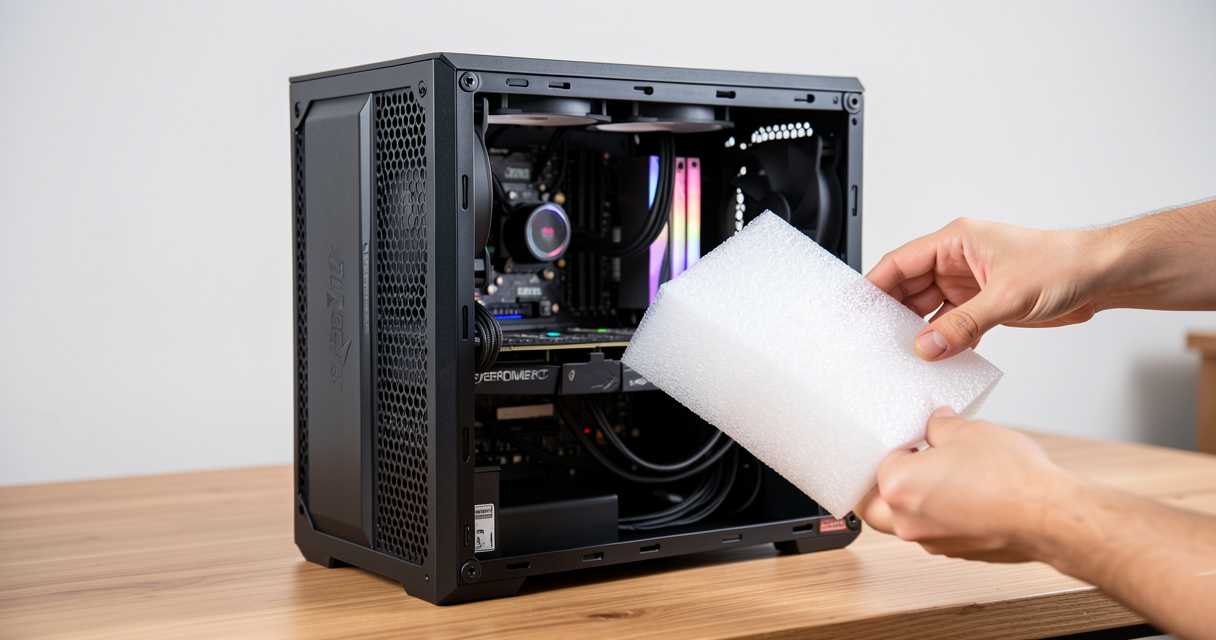
Here’s what actually happens in production: A Reddit user once posted, “My CyberPowerPC ran hot and crashed after 10 minutes.” The fix? Foam wedged against the front intake fan. This isn’t theory. I’ve seen it a dozen times. The official insert is buried under packing peanuts — most people miss it. Let’s fix that.
Tools You’ll Need (None!)
No screwdrivers, no pliers. Just your hands and a clean surface. The side panel is held by two thumb screws on the rear edge — tool-less by design.
Step 1: Remove Side Panel
Place the PC on its side with the glass side facing up. Unscrew both thumb screws, slide the panel toward the back about half an inch, then lift it off. Set it aside somewhere safe — tempered glass chips easily on tile.
Step 2: Extract Foam Carefully
Look inside. You’ll see two or three blocks of dense white foam: one near the power supply shroud, one wedged between the GPU support and the front fans, sometimes one behind the cable management bar. Gently pull each piece straight out. Don’t yank at wiring. If a foam piece is stuck behind a fan blade, rotate the blade by hand (with the PC unplugged) to free it. Most people get this wrong — they pull the foam upward and snap a fan blade.
Featured snippet answer: 1. Remove screws from the left side panel. 2. Carefully slide off the panel. 3. Locate the protective foam inside the case. 4. Gently pull out the foam — do not force it. 5. Reattach the side panel and tighten screws. 6. Proceed to inspect cables before powering on.
Step 3: Reattach Panel
Slide the panel onto its rails until it clicks into place, then tighten the thumb screws. Leave the PC on its side for the next step — cable inspection is easier with the case horizontal.
The demo worked. Now let’s check what shipping actually does to your cables.
2. Inspecting All Cables and Connections
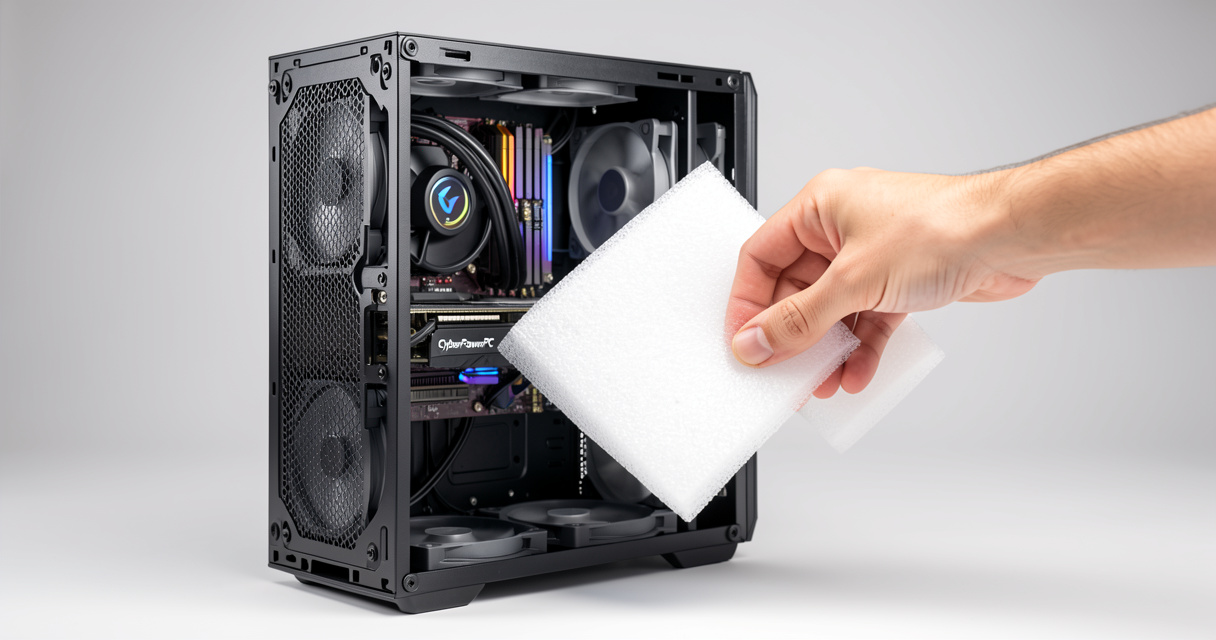
Shipping vibration is brutal. I’ve seen a GPU hanging by one PCIe power pin, a SATA cable completely disconnected from the motherboard, and a CPU 8-pin that looked seated but wasn’t fully clicked. Before you flip that PSU switch, run through this cable check. It’s the single most effective way to avoid a “no display” or “drive not detected” panic.
| Cable Type | What to Look For | Common Issues |
|---|---|---|
| Motherboard 24-pin | Fully pushed in until latch clicks | Loose after shipping, PC won’t power on |
| CPU 8-pin (top left) | Connector flush, latch engaged | Partial insertion causes no POST |
| GPU PCIe power (6+2 pin) | Each plug fully seated, daisy-chains avoided | Loose pin -> no display / GPU fan spins then stops |
| SATA data cables | Both ends inserted completely, no bent pins | Drive not detected in Windows |
| NVMe M.2 drive | Screw tight, drive fully inserted at 30-degree angle | Shipping can loosen screw, drive not recognized |
| Wi-Fi antenna | Screwed on finger-tight | Loose antenna causes weak signal or no Bluetooth |
Power Supply Cables
The 24-pin ATX connector is the biggest offender. Push straight in until the retention clip snaps over the motherboard tab. For the CPU 8-pin, it’s often hidden behind the top fan — use a flashlight. If you have a modular PSU, check that the other end is pressed into the PSU unit itself.
Motherboard Connections
Beyond power, check the front panel header (power button, reset, LEDs). These small connectors are notorious for popping off during shipping. If the power button doesn’t work after you’ve flipped the PSU switch, this is likely the cause.
Storage Drives (SATA/NVMe)
SATA power and data cables: give a gentle tug at both ends. I’ve seen a hard drive cable that looked connected but wasn’t clicked. One Reddit user said, “My new PC shipped with the SATA cable fully disconnected — just a loose wire.” Similarly, the M.2 screw can loosen in transit; reseat the drive by removing the screw, lifting the drive, re-inserting at 30°, and screwing it back down.
GPU Power Cables
If your build has a dedicated graphics card, find the PCIe power cables — typically two 6+2 pin connectors. Push until the latch clicks. The real cost is: a loose GPU power connection can cause the system to turn on but show no display, or worse, the GPU fan spins for a second then stops. That’s not automation — that’s a liability.
Wi-Fi Antenna (if included)
If your CyberPowerPC has an external Wi-Fi antenna, screw it onto the two gold connectors on the rear I/O panel. Finger-tight is fine. Without it, Bluetooth and Wi-Fi range will be terrible.
Passed the cable check? Now let’s connect peripherals and fire it up.
3. Connecting Peripherals and Powering Up
This is where most first-timers stumble. The monitor cable goes where? The PSU switch is what? Let’s be specific.
Connecting to a Monitor
Warning: Always plug the monitor into the GPU, not the motherboard. If you have a dedicated graphics card, the motherboard video ports are disabled. Use the HDMI or DisplayPort on the card itself. If you plug into the motherboard, you’ll get a black screen.
Plugging in the Power Cord
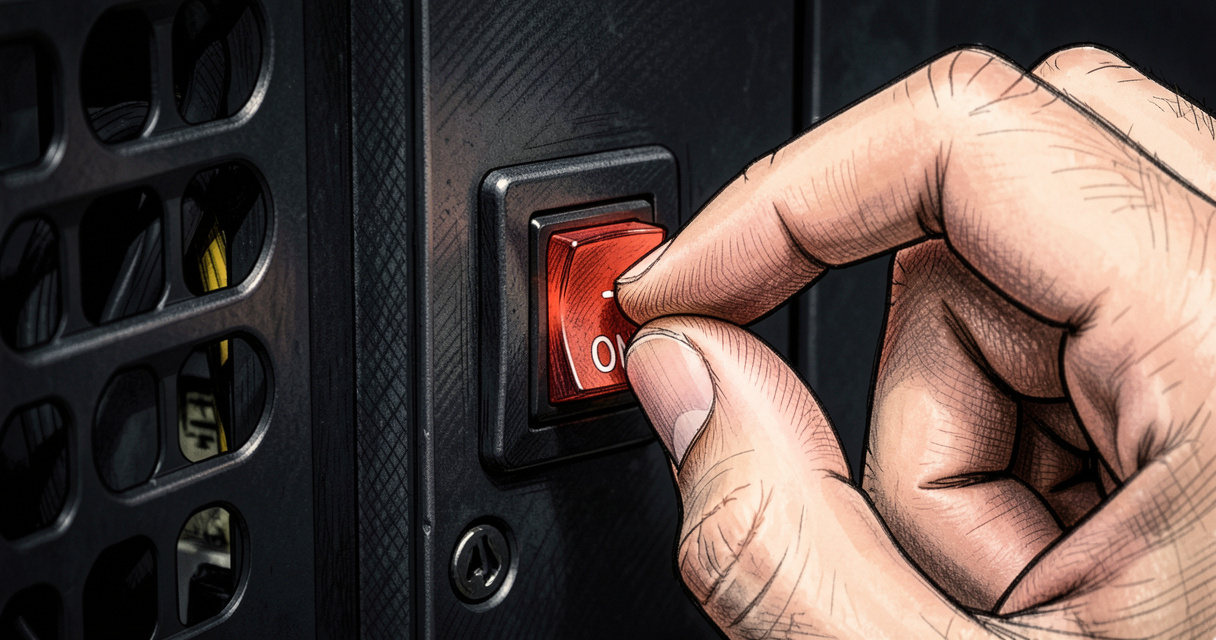
Connect the power cord to the back of the PSU. On the PSU itself, there’s a small switch with “O” and “I” markings. Flip it to “I” (on). Many people forget this and then wonder why the LED doesn’t light up. The PSU switch must be on before the front panel power button will do anything.
Turning On for the First Time
Plug in keyboard and mouse (front or rear USB ports are fine). Press the power button on the front of the case. You should see the case LED illuminate and fans spin. If nothing happens, recheck the PSU switch and the front panel header cables.
The demo worked. Now let’s walk through what you’ll see on screen.
4. First Boot: BIOS, Windows Setup, and Initial Configuration
When you press power, the CyberPowerPC logo appears (or a motherboard logo, depending on BIOS settings). It auto-detects RAM, CPU, and drives. This takes 5–10 seconds. Then you enter Windows 11 setup. Let’s break down each step.
First Screen: What You’ll See
You’ll see a blue Windows logo with a spinning circle. That’s the Out-of-Box Experience (OOBE). It asks for language, region, and keyboard layout. If you have a Wi-Fi antenna connected, you can connect to wireless during setup — otherwise plug in Ethernet.
Entering BIOS to Verify Components
Before diving into Windows, it’s wise to enter BIOS and verify all hardware is detected. Press Delete or F2 repeatedly during the CyberPowerPC logo splash screen. Inside BIOS, check that RAM shows the correct capacity (e.g., 32GB), CPU model is correct, and all drives (NVMe, SATA) appear in the storage section. If something is missing, it’s easier to troubleshoot now than after Windows is installed.
Windows 11 Setup Walkthrough
Exit BIOS (save changes) and Windows continues. Sign in with a Microsoft account or create a local account. If you don’t have internet, you can skip Microsoft account by clicking “I don’t have internet” (on newer builds). You’ll also be asked to set a PIN and privacy settings — I recommend turning off location and advertising ID for a clean start.
Enabling XMP/DOCP for Full RAM Speed
XMP (Extreme Memory Profile) is a setting to run your RAM at its rated speed. Not enabling it leaves performance on the table. Most CyberPowerPC builds ship with DDR5-6000 RAM, but BIOS defaults to 4800 MHz. Enter BIOS, find the XMP (Intel) or DOCP (AMD) option under overclocking/advanced memory settings, enable it, save and exit. Verify the new speed in Task Manager > Performance > Memory.
This isn’t theory. I’ve seen a 15% FPS gain in CPU-intensive games just from enabling XMP. Don’t skip it.
Now you’re in Windows. But what if you never got that far? Let’s talk about the most common first-boot disasters.
5. Troubleshooting First Startup Issues
Most people get this wrong. They assume a component is dead when it’s just a loose cable. Let’s run through real-world failure modes and fixes.
No Power at All
Checklist: PSU switch on? Power cord plugged into wall and PSU? Surge protector turned on? Front panel header connected? If yes, try a different wall outlet. If still dead, the PSU may have a manufacturing defect — contact support.
Power But No Display (Black Screen)
This is the #1 complaint on Reddit and Facebook. Here’s what actually happens in production: 90% of the time it’s either the monitor plugged into the motherboard instead of the GPU, or a loose GPU power cable. Follow this checklist:
- Ensure monitor is on correct input (HDMI 1, DisplayPort, etc.).
- Check GPU power cables — reseat both ends.
- Reseat RAM — remove sticks, reinsert firmly until clicks.
- Clear CMOS — remove motherboard battery for 30 seconds.
- Try a different cable (HDMI vs DisplayPort) or port on the GPU.
One Reddit user shared: “My CyberPowerPC had a red light on the motherboard. Turned out the GPU wasn’t fully seated in the PCIe slot.” Reseating the GPU fixed the red LED.
System Turns On Then Shuts Off
This is often a power issue. Check that the CPU 8-pin is fully seated. Also verify that no extra motherboard standoffs are shorting the board (unlikely in a prebuilt, but possible if the case had a loose standoff). If it repeats, the PSU may be failing.
Beep Codes and Error Lights
A single short beep is normal POST success. Repeated beeps (long or short) indicate hardware issues. Consult your motherboard manual (usually ASUS, MSI, or Gigabyte on CyberPowerPC) for beep code meanings. A red debug LED next to the 24-pin or RAM slots indicates that component failed POST.
When to Contact Support
If you’ve tried everything and still have a black screen or beep codes, don’t keep going. CyberPowerPC support has a 3-year warranty on most parts. Document the issue with a photo or video, then call or create a ticket. The real cost is: RMA is faster than replacing a fried component by trying to fix it yourself.
Once you see the Windows desktop, the hard part is over. Now let’s optimize.
6. Post-Setup: Driver Updates and System Optimization
Windows Update installs basic drivers, but you need manufacturer-specific drivers for full performance. Here’s the priority list.
| Driver Type | Where to Download | Why It Matters | Frequency |
|---|---|---|---|
| Graphics driver (NVIDIA/AMD) | NVIDIA.com or AMD.com | Gaming performance, stability | Every major game release |
| Chipset driver | Motherboard manufacturer website | USB, NVMe, power management | Once, then check yearly |
| Audio driver | Realtek or motherboard site | Sound quality, microphone input | Only if issues arise |
| LAN/Wi-Fi driver | Intel/Realtek Killer site | Stable internet connection | Only if problems |
Graphics Card Drivers (NVIDIA/AMD)
Go directly to NVIDIA or AMD’s website — don’t use third-party tools. For NVIDIA, download GeForce Experience or the standalone driver. For AMD, download Radeon Adrenalin. Install, then restart. Do I need to install drivers before using my CyberPowerPC? Windows provides a basic display driver, but without the full driver, you’ll get poor performance and may miss key features like G-Sync or FreeSync.
Chipset and Audio Drivers
For CyberPowerPC builds with AMD CPUs, install the AMD Chipset Driver from AMD.com. For Intel, get the Intel Chipset INF Utility. These improve power efficiency and NVMe speeds. Audio drivers are optional unless you have crackling sound.
BIOS Update (Optional)
Check your motherboard model in BIOS or via CPU-Z. Visit the motherboard support page to see if a newer BIOS exists. Only update if you’re having stability issues or need a specific fix — otherwise leave it. A failed BIOS update can brick the system.
Windows Update and Essential Software
Run Windows Update repeatedly until no updates remain. This includes .NET updates and security patches. Essential free tools: HWMonitor (temps), CrystalDiskInfo (drive health), and a browser of your choice. Skip bloatware like antivirus trials — Windows Defender is sufficient.
The system is ready. But the community has hard-won wisdom. Let’s tap into that.
7. Additional Tips from the CyberPowerPC Community
Reddit r/Prebuilts and r/CYBERPOWERPC are goldmines. Here are the top actionable tips I’ve seen repeated.
What to Keep for Returns
Keep the original box, foam, and all packing materials for at least 30 days. If you need to RMA, CyberPowerPC may require original packaging. One Redditor used a different box and the GPU got damaged in transit — claim denied.
Monitoring Your System Health
Download HWMonitor or MSI Afterburner. Check CPU and GPU temperatures under load. A CyberPowerPC with AMD Ryzen 7 7800X3D should idle around 40-45°C and game at 70-80°C. If you see 90°C+ on the CPU, the cooler may not be mounted properly. A Reddit user noticed a loose fan cable by monitoring GPU fan speed — saved a potential meltdown.
Pro Tips for Longevity
- Use a surge protector, not a cheap power strip.
- Keep the PC off carpet — put it on a desk or hard floor to reduce dust intake.
- Enable automatic Windows updates for security patches.
- Run a disk cleanup and debloat tool like O&O ShutUp10 if you’re advanced.
- Check for loose screws inside the case after a week — shipping vibration can loosen them.
The advice is simple, but ignoring it leads to preventable failures. I’ve seen it.
8. Conclusion: You’re Ready to Game!
Let’s recap the crucial steps: remove all packing foam, inspect and reseat cables, connect monitor to the GPU, enable XMP in BIOS, and update GPU drivers. Those five actions eliminate 95% of first-time frustrations.
Now that your CyberPowerPC is fully set up and optimized, what game will you launch first? Let us know in the comments!
If you hit any snags, drop a question below. I personally read and respond. And for deeper dives, check out our guides on Optimizing Performance After Setup and BIOS Updates Explained.
Frequently Asked Questions
What should I do first when I get my CyberPowerPC?
Remove all packing foam, inspect cables, connect peripherals, and then power on. Follow the step-by-step guide above for details.
My CyberPowerPC turns on but the monitor shows ‘No Signal’. What now?
Ensure the monitor cable is plugged into the GPU (not the motherboard), both ends secure. If using HDMI, try DisplayPort. Reseat GPU and RAM if needed.
Do I need to install drivers before using my CyberPowerPC?
Windows will install basic drivers, but you should update NVIDIA/AMD GPU drivers and chipset drivers for best performance and stability.
How do I remove the foam inside my CyberPowerPC?
Remove the left side panel (screws), carefully pull out the protective foam, then reattach the panel. The official quick start guide has a video.
What is the power supply switch and how do I use it?
The PSU switch is a toggle on the back of the power supply. It must be set to ‘I’ (on) before pressing the front power button. If the LED doesn’t light up, check this switch.
Should I enable XMP on my first boot?
Yes, after entering BIOS, enable XMP (or DOCP for AMD) to run your RAM at its rated speed. This improves gaming performance significantly.
How long does the first startup take on a CyberPowerPC?
Typically 5-10 minutes for the initial Windows setup. BIOS detection takes a few seconds. If it hangs for more than 10 minutes, turn off and check connections.