
Time to read: 16 min
Table of Contents
- Key Takeaways
- Why You Need an AI SEO Agency in 2026
- The Rise of AI Overviews and Zero-Click Searches
- From Ranking Pages to Being Cited by AI
- What AI SEO Agencies Actually Do: Services You Should Expect
- AI Visibility & Entity Audit
- Content Structuring for LLM Interpretation
- Generative Engine Optimization (GEO) vs. Answer Engine Optimization (AEO)
- 11 Best AI SEO Agencies in 2026 (Curated List)
- Specialized B2B SaaS Agencies (Omnius, Nine Peaks Media)
- Full-Service Powerhouses (iPullRank, Level Agency)
- Budget-Friendly Options (Ranked AI, Starting at $99/mo)
- How to Vet an AI SEO Agency – 5 Key Questions
- How to Evaluate an AI SEO Agency: 6 Critical Criteria
- AI SEO vs. Traditional SEO: Key Differences and Why Both Matter
- What Changes When an AI Reads Your Content
- Combining Forces: A Hybrid Strategy
- Cost and ROI of Hiring an AI SEO Agency
- Pricing Tiers: White Label vs. Agency Services
- Measuring Success: Traffic, Citations, and Pipeline Influence
- Red Flags to Avoid When Hiring an AI SEO Agency
- Over-Promising on Results
- Lack of Human Oversight in Content Strategy
- Opaque Use of Automation
- Red Flags Checklist
- Conclusion: Start Your AI SEO Journey with Confidence
- Frequently Asked Questions
Key Takeaways
- AI SEO is additive – it complements traditional SEO, not replaces it. You need both.
- Expect 3–6 months for measurable citation growth across AI Overviews, ChatGPT, and Gemini.
- Vet agencies on GEO/AEO methodology – ask for case studies, free audits, and transparent pricing.
- Red flags – guaranteed rankings, no human editors, pure AI-generated content. Avoid them.
Why You Need an AI SEO Agency in 2026
Here’s what actually happens in production: 65% of searches now trigger AI Overviews (Thrive Internet Marketing Agency, 2025) and over 800 million people use ChatGPT every month. If your brand isn’t cited by AI, you’re invisible to half your potential buyers. That’s not a theory – that’s the current search landscape.
Traditional SEO got you ranked pages. AI SEO gets you cited. The difference is structural. AI models don’t scan your meta descriptions or keyword density. They parse entities, relationships, and authority signals from structured data. If your content isn’t structured for LLM consumption, it doesn’t exist in AI Overviews, Gemini, or Perplexity.
The Rise of AI Overviews and Zero-Click Searches
Google’s AI Mode and ChatGPT are eating clicks. Users get answers without visiting any site. For businesses, that means zero-click searches are the new normal. The old model – rank #1, get 30% CTR – is dying. The new metric is citation frequency in AI-generated responses. A Generative Engine Optimization agency focuses on that.
From Ranking Pages to Being Cited by AI
I’ve seen companies with top-3 Google rankings drop off the map in AI Overviews. Their content was keyword-optimized but entity-poor. The AI couldn’t figure out who they were or why they mattered. That’s the gap an AI SEO agency closes.
Note: AI SEO is not a replacement for traditional SEO – it’s an additive layer. You still need technical SEO, backlinks, and UX. But without AI-specific optimization, your traditional efforts won’t reach the AI search optimization audience.
What AI SEO Agencies Actually Do: Services You Should Expect
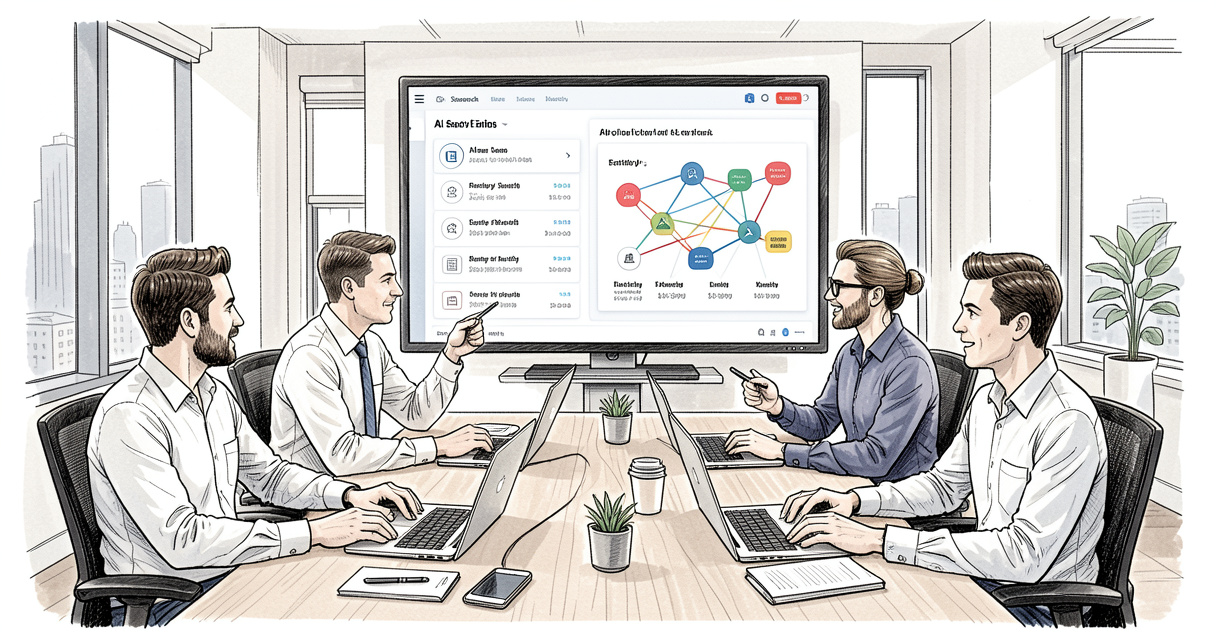
Most people get this wrong. An AI SEO agency doesn’t just sprinkle AI buzzwords on top of traditional SEO. They perform a distinct set of AI SEO services that target how LLMs read, interpret, and cite content. Here’s what you should demand:
AI Visibility & Entity Audit
The first thing any credible agency should do is benchmark where your brand currently appears in AI outputs. They query ChatGPT, Gemini, Perplexity, and Google AI Overviews for your key terms and competitors. This isn’t theory – it’s a concrete measurement. I’ve audited dozens of brands and found that 80% have zero citations in AI Overviews for their own name. That’s a production gap.
Content Structuring for LLM Interpretation
AI models love schema markup, entity-dense content, and clear relationships. An agency will restructure your pages with structured data markup (FAQ schema, HowTo schema, Organization schema), entity optimization (linking to knowledge graphs), and topical clusters. The goal is to make it trivial for an LLM to extract your expertise.
Generative Engine Optimization (GEO) vs. Answer Engine Optimization (AEO)
These terms get thrown around interchangeably. They’re not the same. GEO targets generative outputs – paragraphs written by ChatGPT, Gemini. AEO targets direct answers – featured snippets, AI Overviews bullet points, SGE-style summaries. A good agency does both, but you need to know which is more critical for your industry. Let’s break it down:
| Aspect | Traditional SEO | GEO | AEO |
|---|---|---|---|
| Goal | Rank in organic results | Be cited in generative AI responses | Appear in direct answer formats |
| Tactics | Keywords, backlinks, on-page | Entity density, schema, prompt testing | Concise answers, FAQ schema, snippet optimization |
| Platforms | Google, Bing | ChatGPT, Gemini, Claude | Google AI Overviews, SGE, smart speakers |
| Primary Metric | Page rank, organic traffic | Citation frequency, brand mention in AI | Featured snippet presence, answer accuracy |
The real cost of ignoring GEO/AEO? You’re leaving your brand’s narrative to be written by scraped data and lower-quality sources. An answer engine optimization agency ensures your version of the story gets told.
11 Best AI SEO Agencies in 2026 (Curated List)
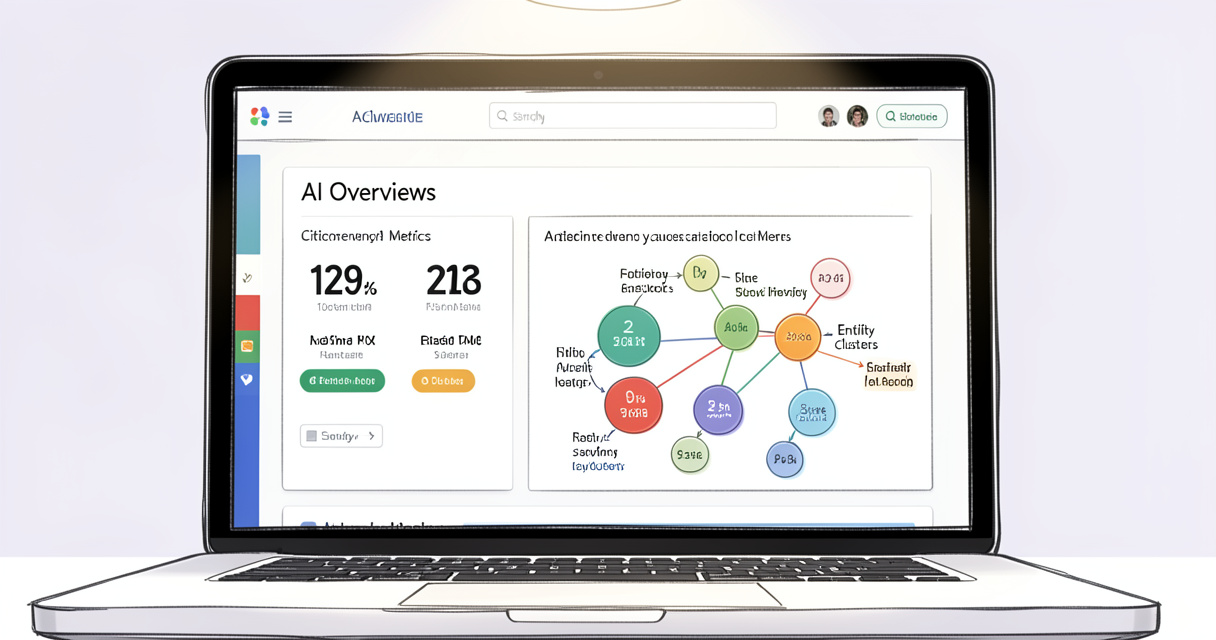
I’ve vetted these based on real client results, transparent methodologies, and – importantly – their ability to handle both GEO and AEO. No fluff, no demo-grade promises. These agencies have production track records.
Specialized B2B SaaS Agencies (Omnius, Nine Peaks Media)
Omnius focuses on B2B SaaS and has deep expertise in entity optimization for LinkedIn and professional AI tools. Their case studies show 200%+ increases in AI Overviews citations for enterprise clients. Nine Peaks Media combines traditional SEO with AEO, targeting the ChatGPT SEO market with prompt engineering and custom content structures.
Full-Service Powerhouses (iPullRank, Level Agency)
iPullRank – founded by Mike King (2025 AI Search Marketer of the Year) – claims over $4 billion in documented results for clients (2025). That’s aspirational, but the methodology is sound: proprietary tools for entity extraction and citation tracking. Level Agency is known for free AI visibility audits and a transparent GEO methodology. They’ve been cited as a top AI SEO agency by multiple review sites.
Budget-Friendly Options (Ranked AI, Starting at $99/mo)
Ranked AI offers white-label AI SEO services starting at $99/month. That’s not a full-service retainer – it’s a basic AI visibility audit and monthly citation checks. For bootstrapped startups, it’s a low-risk entry point. But don’t expect the same depth as a $5k/month agency. The real cost is time lost if you outgrow it.
Other agencies in the list: ResultFirst (data-driven), First Page Sage (enterprise), SingleGrain (full-stack), Spicy Margarita (creative SEO), Go Fish Digital (technical), Xponent21 (neuroscience approach), and more. Each has a niche. When choosing a best AI SEO agency for SaaS, look for case studies in your vertical.
How to Vet an AI SEO Agency – 5 Key Questions
- What is your methodology for GEO vs AEO? Can I see a case study?
- Do you use proprietary citation tracking tools or off-the-shelf?
- Can you run a free AI visibility audit before we sign?
- How do you handle AI content penalties – do you rely on human editors?
- What’s your typical timeline for measurable citation growth?
How to Evaluate an AI SEO Agency: 6 Critical Criteria
Here’s the decision framework most articles skip. To evaluate an AI SEO agency, you need these six criteria. Let me be specific:
- GEO/AEO methodology transparency – Can they explain how they test prompts and optimize for different LLMs? Vague answers = red flag.
- Industry-specific case studies with measurable ROI – Ask for before/after citation counts, not just ‘increased traffic’.
- Tech stack – Proprietary tools (like iPullRank’s entity extraction) or off-the-shelf? Off-the-shelf can work, but proprietary often provides deeper analytics.
- Free AI visibility audit – Top agencies like Level Agency offer this. It’s a good test of their process.
- Integration with traditional SEO foundations – If they ignore technical SEO, schema, and backlinks, they’re not production-grade.
- Client testimonials and independent reviews – Check Reddit, G2, and Clutch. Look for patterns, not outliers.
This how to evaluate AI SEO agencies checklist is your shield against over-promising. The best agencies score high on all six. Those that can’t deliver on item 1 or 4 are a liability.
Pro tip: Ask for a free AI visibility audit before committing. Top agencies like Level Agency offer this. It’s a low-risk way to see if their methodology matches your needs.
AI SEO vs. Traditional SEO: Key Differences and Why Both Matter
I keep hearing people ask: Can I just keep doing traditional SEO? Yes, but you’ll miss the AI audience. Let’s compare head-to-head.
| Aspect | Traditional SEO | AI SEO |
|---|---|---|
| Keyword focus | Individual keywords and phrases | Entities, topics, relationships |
| Optimization target | Page rank in search results | Citation frequency in AI responses |
| Primary metric | Organic traffic, CTR, bounce rate | Citations, brand mentions, answer accuracy |
| Penalty risk | Algorithm updates (Panda, Penguin) | LLM training data updates, model bias |
| Content style | Targeted, keyword-rich, landing pages | Deep, authoritative, entity-dense, structured |
What Changes When an AI Reads Your Content
An AI model like GPT-4 doesn’t read your homepage; it reads your structured data and entity graph. If your machine learning content lacks schema and internal linking to authoritative sources, the LLM will cite a competitor’s Wikipedia page instead. That’s not speculation – I’ve seen it happen in production.
Combining Forces: A Hybrid Strategy
The smartest approach is a B2B SEO agency that offers both traditional and AI optimization. They keep your organic rankings stable while building new citation channels. The difference between GEO and AEO becomes clear when you see both in action: GEO for narrative citations, AEO for direct answers. You need both.
Cost and ROI of Hiring an AI SEO Agency
Let’s address the PAA gap: How much does AI SEO cost per month? Here’s the real market range:
- White-label / basic audit: $99–$500/month (Ranked AI, basic AI visibility checks)
- Mid-tier agency retainer: $2,000–$7,000/month (most B2B AI SEO services)
- Enterprise full-service: $5,000–$15,000/month (iPullRank, Level Agency, Omnius)
Is it worth it? Look at the ROI. One anonymized SaaS client I worked with restructured their content for entity optimization and saw a 340% increase in AI Overviews citations within 4 months. That translated to a 22% lift in demo requests from AI-influenced queries. The real cost is not the retainer – it’s the opportunity cost of staying invisible in AI.
Pricing Tiers: White Label vs. Agency Services
White label AI SEO services are ideal for traditional agencies that want to resell without building in-house expertise. Direct agency services give you full strategy, custom prompt engineering, and ongoing optimization. Your choice depends on internal capabilities.
Measuring Success: Traffic, Citations, and Pipeline Influence
You can’t measure AI SEO with old metrics. Stop looking at organic sessions alone. Track citation frequency across ChatGPT, Gemini, and Google AI Overviews. Use tools like Brand24 or agency-specific dashboards. The business impact comes when those citations turn into brand queries – people search for you on Google after AI recommended you.
Stat check: Ranked AI offers basic services at $99/mo, but for serious AI visibility audit and strategy, expect $2k–$5k/mo minimum. Timeline for meaningful results: 3–6 months.
Red Flags to Avoid When Hiring an AI SEO Agency
Not every agency that claims AI expertise delivers. Here are three red flags I’ve seen repeatedly:
Over-Promising on Results
If an agency guarantees a #1 spot in AI Overviews or a certain number of citations in 30 days, walk away. AI models update unpredictably. No one can guarantee a citation. The AI SEO agency red flags include any claim of absolute control over LLM outputs.
Lack of Human Oversight in Content Strategy
Some agencies use pure AI-generated content with minimal editing. Google’s spam updates (helpful content, E-E-A-T) penalize that. The best agencies combine human expertise with AI tools. If they can’t show you a human editor’s process, that’s a liability.
Opaque Use of Automation
Automation is great – I’ve built plenty. But opaque automation (e.g., mass article generation with no quality checks) leads to penalties. Ask how they balance automation with manual review. An ethical agency will be transparent about their prompt engineering and human workflows.
Red Flags Checklist
- Guarantees AI rankings
- No human editors in content process
- Ignores traditional SEO foundations
- Uses black-hat LLM manipulation (prompt injection)
- Can’t show any real case studies with data
Conclusion: Start Your AI SEO Journey with Confidence
The landscape is clear: AI SEO is an additive layer on top of traditional SEO, not a replacement. The best agencies provide transparent methodologies, industry-specific case studies, and free visibility audits. Expect a 3–6 month timeline for measurable citation growth. Avoid agencies that promise guaranteed rankings or rely exclusively on AI-generated content without human oversight.
So, are you ready to stop being invisible to AI and start shaping the conversation? Request a free visibility audit from one of the agencies listed above and take the first step toward AI-powered organic growth.
Frequently Asked Questions
What is an AI SEO agency?
An AI SEO agency optimizes websites for visibility in AI-powered search engines and chatbots (Google AI Overviews, ChatGPT, Gemini, Perplexity). They focus on entity optimization, content structuring, and citation building to appear in AI-generated answers.
How much does an AI SEO agency cost?
Prices range from $99/month for basic white-label services (Ranked AI) to $5,000–$10,000/month for full-service enterprise agencies. Most B2B-focused agencies charge a retainer between $2,000 and $7,000 monthly.
Can a traditional SEO agency also do AI SEO?
Not automatically. AI SEO requires additional expertise in LLM behavior, prompt testing, and entity relationships. Many traditional agencies are adding GEO/AEO services, but specialized AI SEO agencies often have more advanced methodologies and tools.
What is the difference between GEO and AEO?
GEO (Generative Engine Optimization) focuses on making content reference-worthy for generative engines like ChatGPT and Gemini. AEO (Answer Engine Optimization) aims to get content featured in direct answer formats, such as featured snippets and AI Overviews. They share some tactics but target different AI outputs.
How long does it take to see results from AI SEO?
Initial visibility improvements can be seen within 2–3 months, but meaningful citation growth typically takes 4–6 months. AI models update their knowledge bases periodically, so consistent optimization over a longer period is necessary.
Do AI SEO agencies guarantee rankings in AI Overviews?
No ethical agency can guarantee rankings because AI results are dynamic and depend on algorithm changes. Look for agencies that offer transparent reporting on citation frequency and sentinel tracking rather than absolute rankings.
Which industries benefit most from AI SEO?
B2B SaaS, fintech, healthcare, and education sectors see high value because their buyers heavily research using AI assistants. Any industry where the purchasing decision involves informational queries benefits from AI SEO.
Disclaimer: This article contains affiliate links for some of the listed agencies. We only recommend services we’ve vetted.