Reading time: 5 min
Table of Contents
Key Takeaways
- Grid connection delays are pushing AI data centers toward unconventional power solutions like converted jet engines.
- Speed over efficiency: Converted jet engines can power a data center in 24 months versus years-long wait times for grid connections.
- Temporary fix: These engines are less efficient and more polluting, making them a short-term play with long-term risks.
The Real Cost of Grid Delays
Here’s what actually happens in production: You build the data center, you install the racks, you’re ready to go — and then you wait. And wait. And wait. In Northern Virginia, hooking up 100 megawatts to the grid takes about seven years. That’s not a typo. That’s the reality of our power infrastructure. For AI companies racing to deploy compute, that timeline is a business killer.
The demo worked. Production didn’t. Here’s why: The grid wasn’t designed for the scale of AI compute. Most power capacity won’t come online until 2031, according to industry insiders. That’s not theory — that’s a structural bottleneck. And when you’re a startup burning through runway, waiting seven years for a grid connection is a liability, not a strategy.
Converted Jet Engines: Speed Over Efficiency
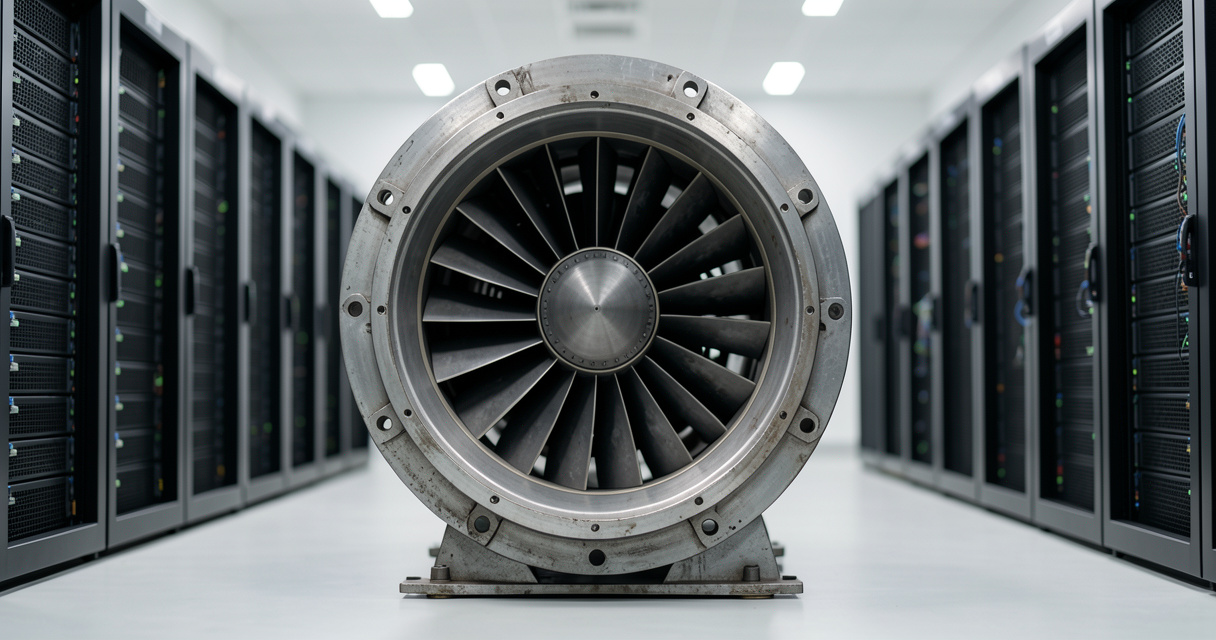
Let me be specific. Some AI data centers are now turning to retired aircraft engines — rebuilt to burn natural gas — to power their operations. These aren’t permanent power plants. They’re a desperate workaround. The main draw is speed: You can have a data center running in 24 months instead of waiting almost a decade for a grid connection. That’s the trade-off.
But here’s the thing: These engines are less efficient and pollute more than turbines designed for conventional gas plants. It takes more of them to produce the same amount of power. That’s not automation — that’s a liability. And while it solves the immediate problem, it creates new ones down the line.
Who’s Already Doing This?
Most people get this wrong: They think this is just a fringe trend. But companies like xAI have already installed eight converted jet-engine turbines in Mississippi to power their Colossus 2 data center in Memphis. OpenAI followed suit in 2025 with gas turbines at its first Stargate site in Abilene, Texas. Crusoe, the startup building that campus, ordered 13 of these units in April.
The real cost is: Time. When Microsoft pulled out as the anchor customer for a data center in Loughton, England, after the local utility said it couldn’t deliver enough power until the early to mid-2030s, that wasn’t just a logistical hiccup. That was a lost business opportunity. And for startups, lost opportunities can be fatal.
The Trade-offs and Risks
This isn’t theory. Converted jet engines come with real trade-offs. They’re less efficient, they pollute more, and they’re not a long-term solution. Some experts predict that efficiency and environmental concerns will grow in importance within a year or two. When that happens, companies that bet big on these engines might find themselves stuck with expensive, inefficient infrastructure.
But let’s be clear: For many companies, there is no alternative. The grid is too slow, and the AI race is too fast. Converted jet engines are a stopgap — a way to keep the lights on while waiting for the grid to catch up. It’s not a perfect solution, but it’s a solution.
What This Means for Automation Infrastructure
I’ve seen this pattern before. When the underlying infrastructure can’t keep up, people improvise. Sometimes that improvisation works. Sometimes it creates technical debt that takes years to unwind. The same principle applies here: Converted jet engines are a form of technical debt. They solve a problem today, but they create new problems tomorrow.
That’s not automation — that’s a liability. If you’re building a data center, you need to think about the long game. Grid connections are slow, but they’re reliable. Converted jet engines are fast, but they’re fragile. The real question is: How long can you afford to wait?
For now, converted jet engines are a necessary evil. But don’t mistake them for a permanent solution. They’re a bridge — and bridges have a shelf life.